
Daikin inverter technology: real savings on energy bills
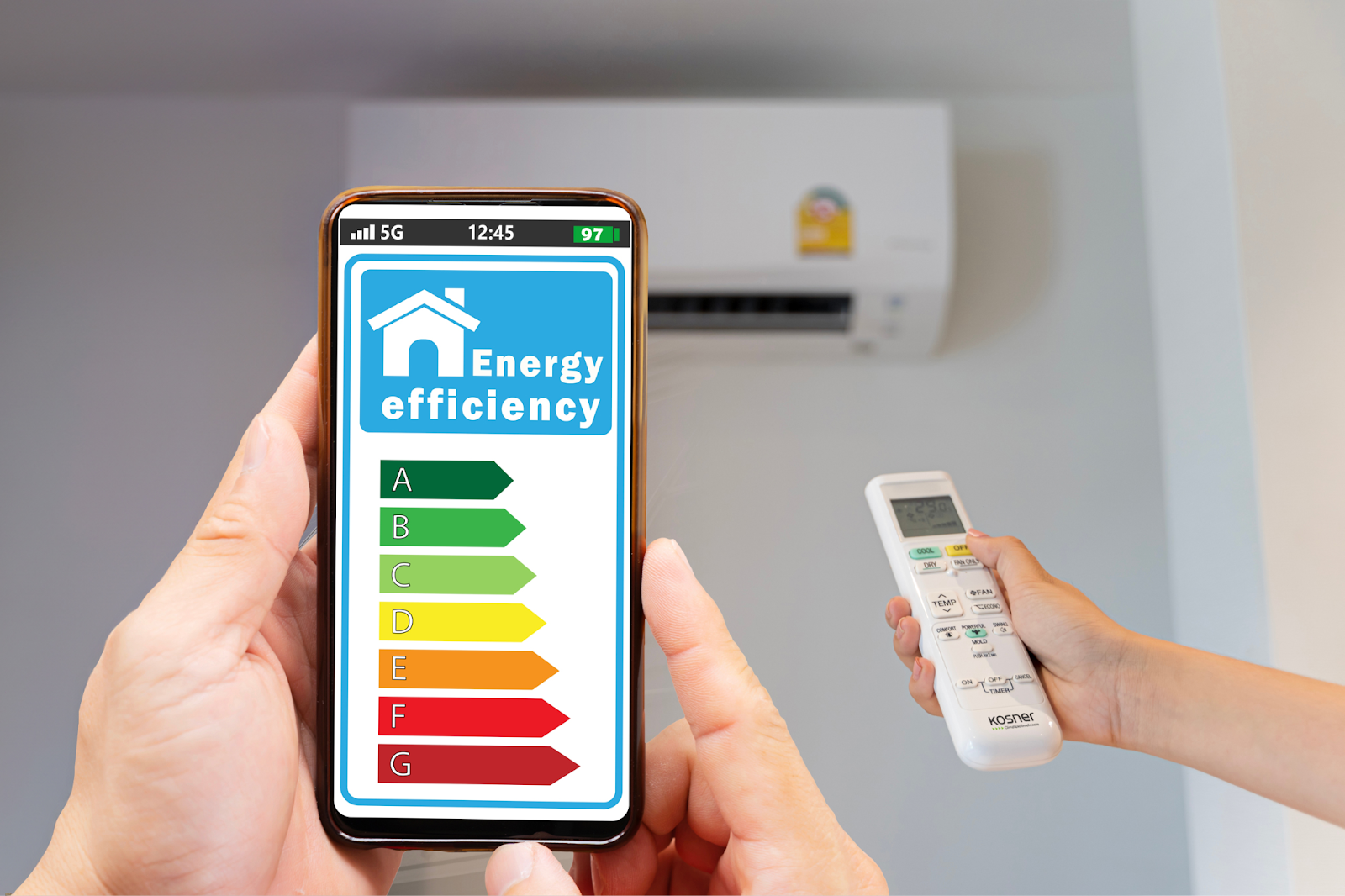
Summer is a time of long-awaited warmth, but for many owners of houses and apartments it is also associated with sharp growth
electricity bills. The desire to maintain comfortable coolness often conflicts with the need
control your electricity costs. Luckily, modern technology offers a smart solution to this problem.
The Daikin inverter air conditioner is not just a device for cooling the air, but a smart investment in
your comfort and family budget.
How does a conventional air conditioner work and why is it uneconomical?
To understand the advantages of inverter technology, it is first worth understanding the operating principles of standard,
non-inverter air conditioner. Its operation is reminiscent of a sprinter: it turns on at full power, cools quickly
the room to the set temperature and completely turns off the compressor. As soon as the sensor detects an increase
temperature, the cycle repeats.
This “on-off” mode has several significant disadvantages:
- Temperature fluctuations. Due to cyclical operation, the temperature in the room constantly fluctuates
within 3-5°C, which creates noticeable discomfort. - High starting currents. Each compressor start from scratch requires maximum consumption
energy, which leads to high electricity bills. - Increased wear. Constant on and off cycles place significant stress on the
The compressor is the “heart” of the air conditioner, which shortens its service life.
How the inverter works: technology that works for your wallet
The Daikin inverter air conditioner operates according to a fundamentally different, more intelligent scheme. Instead of sudden inclusions
and shutdowns, the inverter smoothly regulates the compressor power. Having reached the set temperature, it does not turn off, but
switches to operating mode at minimum power to accurately maintain a comfortable microclimate.
The advantages of this approach are obvious:
- Precise temperature maintenance. The deviation from the set value is no more than ±0.5°C,
which eliminates unpleasant changes. - Energy saving. The absence of constant peak loads during startup allows reducing
energy consumption up to 30-50% compared to conventional models. - Low noise level. Smooth operation of the compressor at low speeds makes inverter models
much quieter. - Air conditioner reliability. Reducing the load on the compressor extends its service life,
ensuring durable and stable performance.
Savings in numbers: calculating the payback of a Daikin inverter air conditioner
Although the initial cost of the inverter model is higher, this difference is quickly compensated for by savings on
operating costs. Let's calculate the approximate payback period of the inverter.
Let's take as an example an air conditioner for a room of 25 m² with a power of 2.5 kW.
- Regular model (energy efficiency class A, SEER ≈ 4.0) consumes about 625 Wh.
- Daikin inverter model (class A+++, SEER ≈ 8.0) consumes on average 30% less, that is
about 438 W/h.
Let's assume the air conditioner runs 8 hours a day for 120 days a year (4 summer months).
- Annual consumption of conventional model: (0.625 kW * 8 hours * 120 days) = 600 kWh.
- Annual consumption of inverter model: (0.438 kW * 8 hours * 120 days) = 420 kWh.
Annual savings will be: (600 kWh – 420 kWh) * 800 sum/kWh = 144,000 sum. Savings over 10 years of operation
will reach 1,440,000 soums, which significantly reduces the difference in the initial cost and makes the purchase profitable in
long term.
Additional Daikin technologies for maximum efficiency
Daikin is constantly improving its technology to ensure maximum savings and comfort:
- Energy efficient refrigerant R-32. This freon is not only more environmentally friendly, but also has better
thermal conductivity properties. Its use increases the overall energy efficiency of the air conditioner by 5%. - Daikin heat pump. Inverter models can not only cool, but also effectively heat
room even at outside temperatures down to -20°C. At the same time, for 1 kW of consumed electricity the system
produces up to 4 kW of heat, which is several times more efficient than conventional electric heaters. - Intelligent Eye sensor. This smart infrared sensor detects the presence of people in the room.
If the room is empty for more than 20 minutes, the air conditioner automatically switches to energy-saving mode,
preventing unnecessary consumption of electricity.
Conclusion
Investing in a Daikin inverter air conditioner is a smart and forward-thinking decision. You not only get
ideal microclimate without noise and temperature fluctuations, but also significantly reduce your energy costs
from year to year. This is technology that works for your comfort and your budget, proving that modern conveniences
can and should be economical.