
Not just installation, but installation: why the lifespan of your air conditioner depends on it
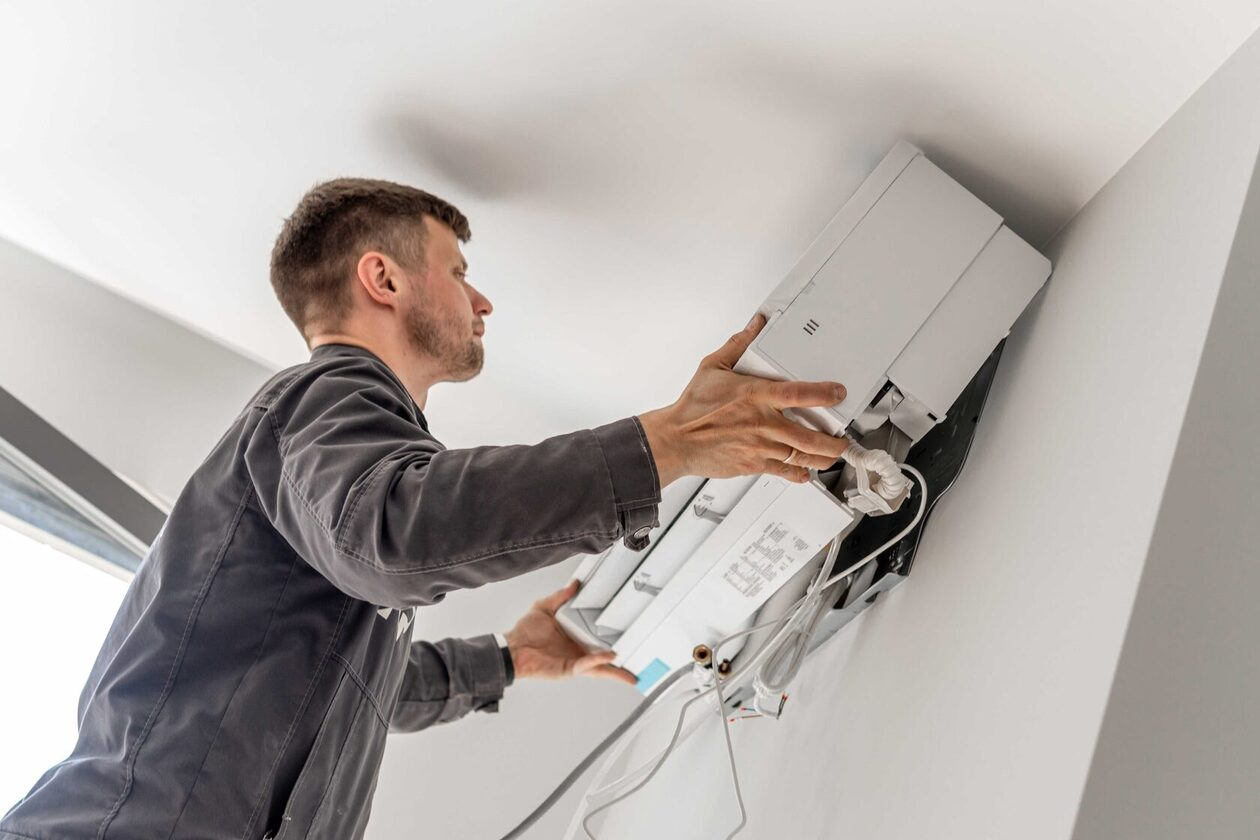
The air conditioner begins with installation. Unfortunately, many realize this simple truth too late. Imagine the situation: you have carefully chosen an expensive and reliable split system, investing in future comfort. But in an attempt to save money, they entrusted the installation to specialists with the lowest price on the market. And now, after a few months, instead of pleasant coolness, you get extraneous noise, drops of water on the wall and, in the worst case, a repair bill comparable to the cost of the device itself. The statistics from service centers are inexorable: up to 80% of all air conditioning equipment malfunctions are caused by errors made during installation.
Why you can’t trust installation to “half-price experts”: hidden threats
The low cost of installing a split system almost always means the crew saves on time, tools or supplies. This leads to critical errors, which do not always appear immediately, but are guaranteed to shorten the life of the equipment.
- No vacuuming. This is the silent killer of the compressor. Before starting the refrigerant from the copper pipes (routes), it is necessary to remove all air and moisture. If this is not done, the moisture remaining in the circuit mixes with freon and oil, forming acid. This aggressive mixture slowly corrodes the compressor windings, causing it to burn out. Air in the system also reduces performance and can cause ice jams.
- Improper drainage. The most common and noticeable mistake. The drainage hose that removes condensate from the indoor unit must have a constant slope. If it is laid incorrectly or allowed to sag, water will begin to accumulate and flow back into the room. The result is wet walls, damaged wallpaper and furniture, the risk of mold and mildew, as well as conflicts with neighbors if drops fall on their windows or façade.
- Poor quality fasteners. Skimping on brackets and anchor bolts for your outdoor unit can lead to disaster. A heavy unit that vibrates during operation must be mounted on the wall with a multiple safety margin. Otherwise, there is a real risk of it falling, which is dangerous not only for your property, but also for people’s lives.
- Incorrect refrigerant charge. A lack or excess of freon is equally harmful to the system. A lack of refrigerant leads to overheating of the compressor and its failure. Excess leads to water hammer and mechanical destruction of valves. Precise filling is only possible using special equipment.
What a reference installation should look like: step-by-step instructions for a thoughtful client
Correct installation of an air conditioner is a clear technological process. Understanding its main stages, you will be able to control the work of the team.
Step 1: Select a location
- Indoor unit: It is installed so that the flow of cold air does not blow directly on people - on the bed, sofa or desk. Ideally - on the side of the seating area or above the door. It is also important to leave a sufficient distance to the ceiling (at least 10-15 cm) for free air circulation.
- Outdoor unit: Placed in a location accessible for future maintenance. It cannot be installed on glazed balconies or close to the wall. To reduce noise and vibration transmitted to the wall, special rubber vibration-damping pads must be used.
Step 2: Installation of communications
The freon route (two copper tubes in thermal insulation), the interconnect cable and the drainage hose are laid in a single bundle. The drainage hose must have a constant slope of at least 1 cm per meter of length to ensure condensate drainage. (Imagine the diagram: the line running from the indoor unit to the wall has a visible but neat downward slope).
Step 3: Rolling and Vacuum
The ends of the copper tubes are flared with a special tool (roller) for a tight connection with the blocks. After this, a vacuum pump is connected to the system. This is a mandatory step! The vacuum process takes 20-30 minutes and removes all air and moisture from the route, which are detrimental to the compressor.
Step 4: Pressure check and test run
After evacuation, installers use a pressure gauge station to check the tightness of all connections. Once they are sure there are no leaks, they open the ports and release refrigerant into the system. Then the air conditioner is turned on in all modes (cooling, heating, ventilation) to check its operation, the absence of extraneous noise and cooling efficiency.
Checklist for choosing an installation team: 5 questions to ask before starting work
- Are you using a vacuum pump and gauge station? (Correct answer: “Yes, this is a mandatory part of standard installation”).
- How do you ensure the slope of the drainage pipe and where do you plan to discharge the condensate? (The answer should be clear: “We make the slope according to the level, we remove the condensate to the street so that it does not interfere with the neighbors”).
- Do you provide a guarantee for installation work? (Professionals always guarantee their work, usually for 1-2 years).
- What tool will you use to flare copper tubes? (The correct answer should include mention of a professional flarer with an eccentric, which ensures a straight and smooth taper).
- Can you show me the pressure gauge readings during evacuation? (Qualified installers are not afraid of such control and will readily demonstrate the process).
The economics of your choice: overpay now or ruin later
Let's compare two installation approaches.
|
Criterion |
“Savings” on installation |
Professional installation |
|
Initial cost |
Low (for example, 400,000 soum) |
Standard (for example, 700,000 soum) |
|
Risks |
Leaks, noise, loss of power, compressor breakdown. |
Minimal, covered by the work guarantee. |
|
Average costs after 1-2 years |
Diagnostics (from 250,000 rubles), leak elimination and refilling (from 450,000 sum), drainage repair (from 300,000 sum), compressor replacement (from 2,000,000 sum). |
Zero or minimal (cost of scheduled maintenance). |
|
Overall result after 3 years |
Installation cost + repair cost. Often exceeds the price of the air conditioner itself. |
Only the cost of installation and scheduled maintenance. The equipment works stably. |
Conclusion
Proper installation of a split system is not an additional expense, but a major investment in the durability, efficiency and quiet operation of your air conditioning equipment. Saving several thousand rubles on installation today is almost guaranteed to result in serious costs and headaches tomorrow. Trust your comfort and peace of mind only to certified specialists with good reviews and a professional approach to business. This is the case when the stingy really pays twice.