
Chiller-fan coil system for business: Energy efficiency and comfort in every room
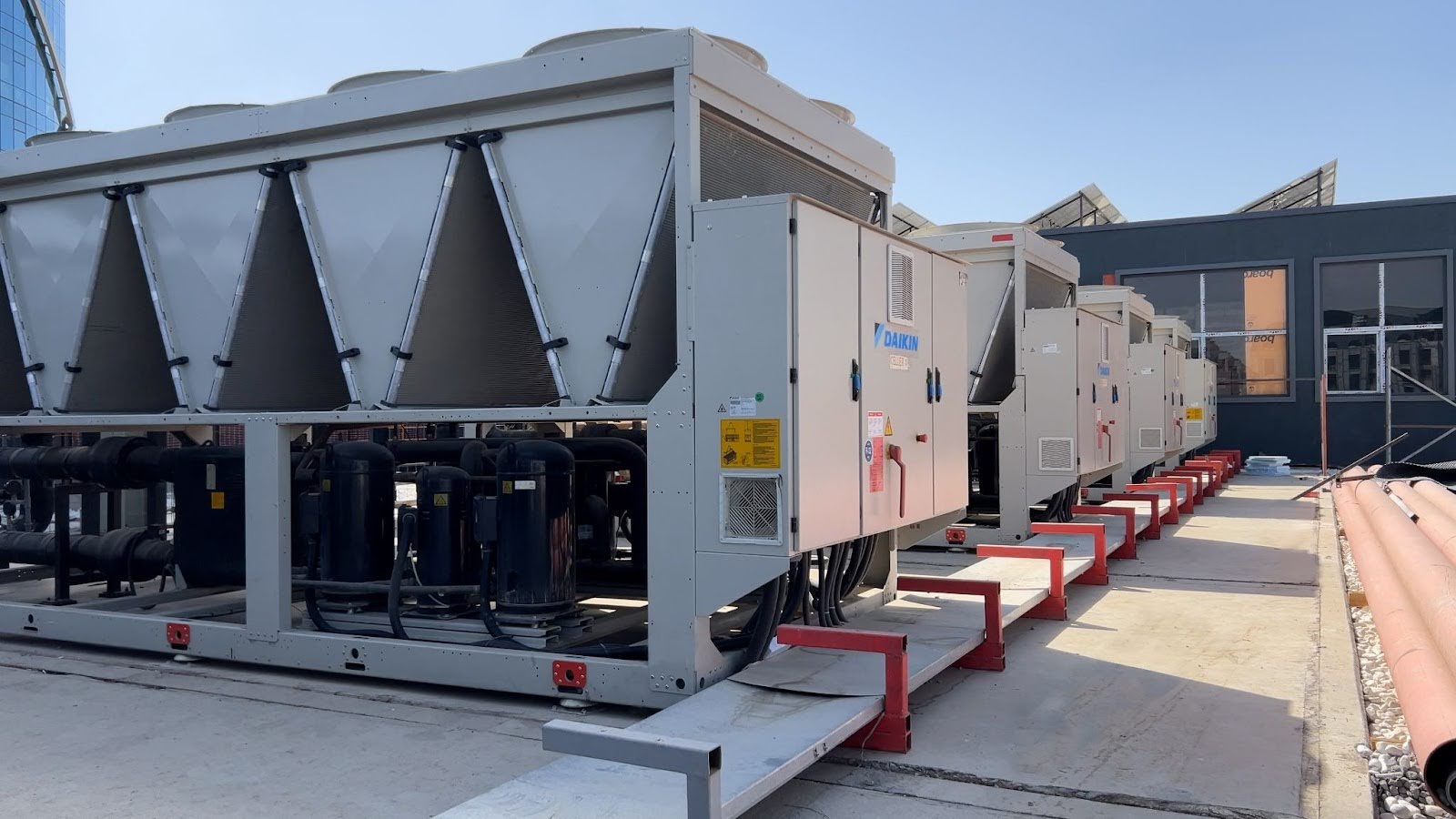
Maintaining a comfortable and, more importantly, individually customizable microclimate in large commercial buildings is one of the key tasks for owners and managers. Whether it is a business center with dozens of tenants, a hotel with hundreds of rooms, or a shopping and entertainment complex with various areas, creating optimal temperature conditions often turns into a complex and expensive process. The chiller-fan coil system is a modern, centralized yet flexible solution that can satisfy a wide range of needs and provide long-term savings.
How the chiller-fan coil system works: simply about complex technology
To simplify, the principle of operation of the chiller-fan coil system can be compared to a centralized heating system, only working for cooling. This system has two main components:
- Chiller is a powerful refrigeration machine, a kind of “refrigeration center” of the building. Its job is to cool or heat a heat transfer fluid (usually water or glycol).
- Fan coil units (fan coils) are local “actuator devices” that are installed directly in the premises.
The key difference between this system and many separate split systems is the coolant. Instead of potentially dangerous and expensive freon, ordinary water or antifreeze liquid circulates through the pipes between the chiller and fan coil units. This is not only safer, but also allows you to lay highways of almost unlimited length, covering the entire building.
Imagine the diagram: the chiller is installed on the roof or in a technical room. A system of two pipelines (supply and return lines) diverges from it throughout the building. On each floor, fan coil units are connected to these pipes: for example, cassette units built into the suspended ceiling in open-space spaces, and wall units in individual offices or hotel rooms.
Key benefits for your business
Scalability and flexibility
One of the main advantages of the system is its flexibility. You can easily add new fan coil units when remodeling premises, new tenants, or even adding new space, without changing the central refrigeration unit. This is a strategic saving on future costs.
Individual temperature control
The system allows you to organize zone temperature control. Each tenant in his office, guest in a hotel room or administrator of a shopping area can set a comfortable mode for himself using an individual fan coil control panel. This approach significantly increases the loyalty of clients and tenants.
Energy efficiency and reduced operating costs
Modern chillers have a high energy efficiency ratio (COP/EER), and fan coil units are equipped with fans with continuously variable rotation speed. This means that the climate system for a business center consumes exactly as much energy as is needed at the moment, which leads to a significant reduction in energy bills.
Aesthetics and architectural preservation
Unlike VRV/VRF systems or a set of split systems, you do not have to cover the façade of the building with dozens of outdoor units. One chiller can be discreetly placed on the roof or in a utility room, completely preserving the original architectural appearance.
Versatility
The chiller-fan coil system can work not only for cooling in summer, but also for heating in the off-season and in winter (in heat pump mode). More advanced, four-pipe systems are capable of simultaneously cooling rooms on the sunny side of the building and heating them on the shady side, providing an ideal temperature balance.
Where the system reveals its potential: target objects
- Office centers: The ability to provide each tenant with independent climate control becomes a powerful competitive advantage when renting out space.
- Hotels: Individual comfort in each room directly affects guest satisfaction and the hotel's rating.
- Shopping and entertainment complexes (SEC): The system provides effective air conditioning of the shopping center, allowing flexible control of the climate in different zones: maintaining coolness in shopping galleries, lower temperatures in cinema halls and comfortable warmth in the food court area.
What to Look for: Equipment Types and Selection
The correct selection of components is the key to the effectiveness of the entire system.
Types of fan coil units
- Cassette: Ideal for spaces with Armstrong-type suspended ceilings, they distribute air evenly in four directions.
- Duct: They are installed hidden behind a false ceiling, the air is distributed through a system of air ducts and grilles. An excellent solution for designer interiors.
- Wall mounted: Externally similar to the internal units of split systems, they are optimal for individual offices, meeting rooms and hotel rooms.
Chiller types
- Air cooled condenser: A simpler and more common type, mounted outdoors (roof, surrounding area).
- Water cooled condenser: They have higher efficiency, but require an additional circuit with a cooling tower (a device for cooling water).
When choosing a system, two aspects are key: accurate engineering calculation of the required refrigeration capacity and the involvement of professional designers and installers. A mistake at this stage can lead to ineffective work and unnecessary costs.
Chiller fan coil vs. VRF systems: what to choose?
These are the two main competitors in the central air conditioning segment. The choice depends on the specifics of the object.
|
Criterion |
Chiller-fan coil system |
VRF system |
|
Coolant |
Water/antifreeze |
Freon |
|
Length of tracks |
Virtually unlimited |
Limited (usually up to 150-200 m) |
|
Pipe cost |
Inexpensive steel or polypropylene pipes |
Expensive copper pipes |
|
Scalability |
Very high, easy to add new nodes |
Limited by the power of the outdoor unit |
|
Solution cost |
Generally, the initial cost of the equipment is higher |
Typically lower initial cost |
Conclusion
A chiller-fan coil system is not just a purchase of equipment, but a strategic investment in the capitalization of your commercial real estate. It provides a high level of comfort for tenants and visitors, demonstrates flexibility in changing layouts and, most importantly, pays for itself through long-term savings in operating costs. Investing in such a climate system today means increasing the attractiveness and profitability of your property for years to come.